

- Introduction
- What is Rapid Elasticity in Cloud Computing?
- Elasticity vs Scalability in Cloud Computing
- How Rapid Elasticity Works
- Benefits of Rapid Elasticity
- Real-World Examples of Rapid Elasticity
- Challenges of Rapid Elasticity
- Rapid Elasticity and Business Value
- FAQs on Rapid Elasticity in Cloud Computing
- Conclusion
Introduction
Rapid elasticity in cloud computing is one of the most important features that makes the cloud so powerful and flexible. It means that computer resources like storage, memory, and processing power can grow or shrink quickly, based on what a business or user needs at that moment. For example, when an online store gets a sudden spike in traffic during a holiday sale, rapid elasticity allows the system to handle thousands of visitors without crashing.
Once the traffic goes down, the extra resources are released, so businesses only pay for what they actually use. This ability to scale up or down instantly makes cloud computing cost-efficient, reliable, and perfect for handling dynamic workloads.
In this article, we’ll explain what rapid elasticity is, why it matters, how it works, and real-world examples you can understand even if you are new to cloud technology.
What is Rapid Elasticity in Cloud Computing?
Rapid elasticity means cloud resources can grow or shrink instantly based on demand. Think of it like stretching a rubber band—it expands when needed and relaxes when pressure is gone.
For example, a streaming service like Netflix can face millions of new users logging in during a popular show release. Thanks to rapid elasticity, the system adds more servers and bandwidth right away. Once the rush is over, resources return to normal, so the company is not overpaying for unused space.
Elasticity vs Scalability in Cloud Computing
Many beginners confuse scalability with elasticity, but they are different.
Scalability means increasing resources step by step as your business grows, often planned in advance. For example, adding more storage each year as your data expands.
Elasticity is more dynamic. It automatically adjusts resources in real time based on current needs. For example, an e-commerce website adds computing power during holiday sales and reduces it after.
Both scalability and elasticity are important, but rapid elasticity makes the cloud especially flexible and cost-efficient.
How Rapid Elasticity Works
Rapid elasticity works through a process called auto-scaling. Cloud service providers like Amazon Web Services (AWS), Microsoft Azure, and Google Cloud Platform (GCP) use advanced tools to monitor workloads. When CPU usage, memory, or network bandwidth reach certain thresholds, the system adds more virtual machines (VMs) or containers automatically.
Key elements include:
- Virtualization technology: enables creating and managing multiple servers on one machine
- Cloud monitoring tools: track performance metrics like CPU utilization
- Resource pooling: ensures shared resources are available to multiple users
- APIs for cloud provisioning: allow automated adjustments without manual input
This system ensures businesses do not face downtime or performance bottlenecks during sudden spikes in demand.
Benefits of Rapid Elasticity
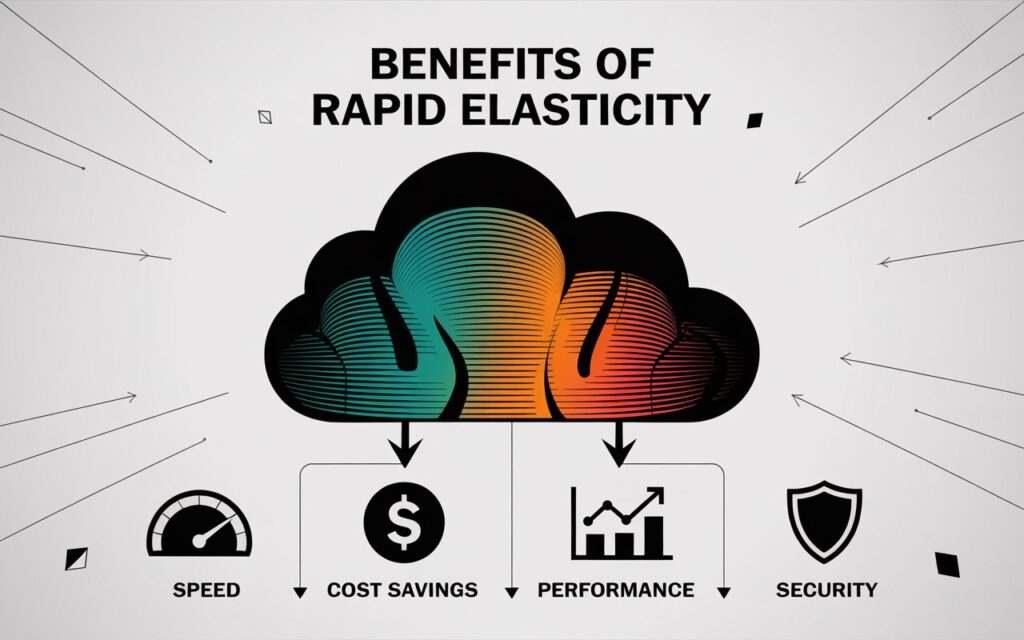
Rapid elasticity provides many advantages:
- Cost efficiency: You pay only for what you use, avoiding waste from over-provisioning.
- Performance optimization: Applications stay fast even during high demand.
- Business agility: Companies can respond to changes quickly, from seasonal e-commerce sales to gaming peak hours.
- Risk reduction: Rapid elasticity prevents server outages and downtime.
- Customer satisfaction: Users enjoy smooth experiences without delays.
For example, insurance companies may face thousands of renewals at the end of each month. With rapid elasticity, they can scale resources to handle the load, then scale down when traffic is lighter.
Real-World Examples of Rapid Elasticity
Netflix
Netflix uses rapid elasticity to handle streaming demand. When millions of viewers start a new show at once, the cloud automatically expands servers worldwide to keep streams running smoothly.
E-Commerce Stores
Online shops like Amazon scale up during holiday seasons such as Black Friday or Cyber Monday. After the sales period ends, resources return to normal, saving money.
Gaming Servers
Popular online games often face traffic spikes during peak hours or new game launches. Cloud elasticity ensures servers remain stable for all players.
These real-world cases show how elasticity is not just a theory but a daily need in digital business.
Challenges of Rapid Elasticity
Even though rapid elasticity is powerful, it has challenges:
- Over-provisioning vs under-provisioning: Adding too many resources can waste money, while too few may cause outages.
- Multi-cloud elasticity issues: Managing elasticity across different providers like AWS, Azure, and GCP can be complex.
- Vendor lock-in risks: Businesses may become dependent on one provider’s tools.
- Cost monitoring: Without tracking, scaling up may lead to unexpected bills.
Tools like CloudZero or built-in monitoring systems from AWS and Google Cloud help businesses manage costs and performance.
Rapid Elasticity and Business Value
Rapid elasticity goes beyond technology. It directly supports business goals:
- Innovation and agility: Startups can test new apps without heavy upfront costs.
- Customer trust: Services with zero downtime gain stronger reputations.
- Flexibility: Companies can adapt to market changes quickly, whether it’s streaming, e-commerce, or data analytics.
This feature of cloud computing helps even small businesses compete with larger players by giving them the same level of IT flexibility.
FAQs on Rapid Elasticity in Cloud Computing
Q1: What is rapid elasticity in cloud computing?
Rapid elasticity means cloud services can quickly add or remove resources when demand changes. For example, if an app gets more users suddenly, the cloud adds more power instantly. When demand drops, resources scale back, saving costs.
Q2: What is meant by elasticity in cloud computing?
Elasticity in cloud computing means flexibility. It allows resources to grow or shrink automatically, based on what’s needed. Think of it like a rubber band—you stretch it when demand increases and relax it when demand goes down.
Q3: Why is rapid elasticity beneficial?
Rapid elasticity helps save money and improve performance. Businesses only pay for the resources they use. It also prevents downtime during traffic spikes, like holiday sales or streaming events.
Q4: Is rapid elasticity a main feature of cloud computing?
Yes, rapid elasticity is one of the core features of cloud computing, along with resource pooling, measured service, and on-demand self-service. Without elasticity, the cloud would not be as flexible or cost-effective.
Q5: What’s the difference between scalability and elasticity in cloud computing?
Scalability means adding more resources for long-term growth, often planned. Elasticity means resources change automatically in real time. For example, scaling adds new servers for growth, while elasticity handles sudden spikes without manual help.
Q6: Can you give an example of rapid elasticity?
Yes. Netflix is a great example. When millions of users stream a new show at the same time, the system adds more servers instantly to handle the load. After the rush ends, resources scale back to normal.
Conclusion
Rapid elasticity in cloud computing is what makes cloud services flexible, cost-efficient, and reliable. It ensures businesses can handle sudden demand without overspending. From streaming platforms like Netflix to e-commerce and gaming, rapid elasticity supports growth, customer satisfaction, and business agility.
To learn more about how cloud computing features work together, you can read detailed guides from Amazon Web Services or Google Cloud


Pingback: Top Disadvantages Of Cloud Computing You Should Know
Pingback: Which Statement Describes A Characteristic Of Cloud Computing?