
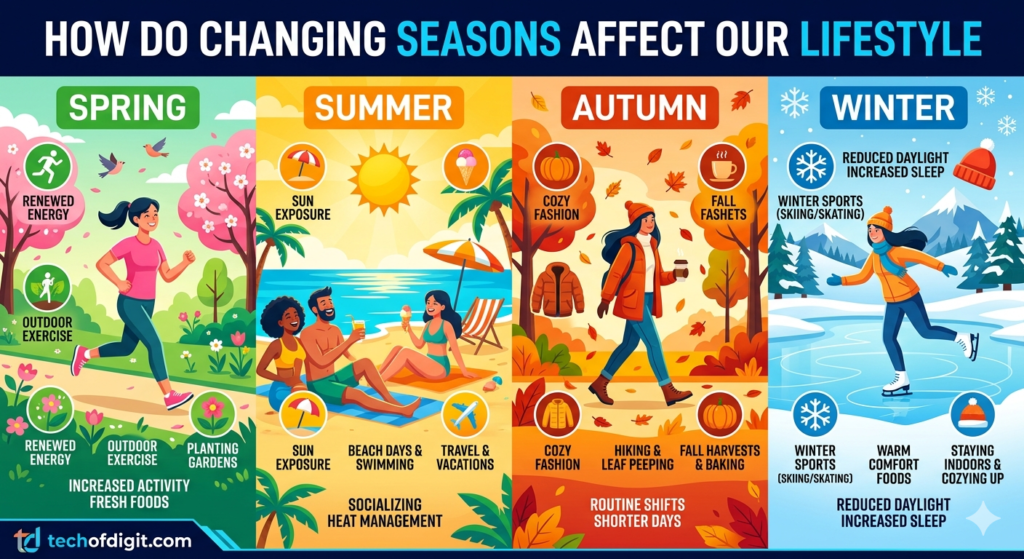
Have you ever felt more tired in winter or more active in summer? Many people notice these shifts but do not always understand why. If you have wondered how do changing seasons affect our lifestyle, the answer is linked to sunlight, temperature, and your body’s internal clock.
Seasons bring lifestyle and weather shifts that affect energy and motivation, sleep, mood, and daily habits. Let’s break it down in simple terms.
- What Happens When Seasons Change
- How Light and Daylight Affect Our Mood and Body
- Seasonal Mood Changes and Mental Health
- Seasons and Daily Routines
- Physical Health and Seasonal Effects
- Behaviour and Lifestyle Choices Across Seasons
- Seasons and Stress or Financial Decisions
- How to Adapt to Seasonal Shifts
- When to Seek Help for Seasonal Challenges
- Frequently Asked Questions
What Happens When Seasons Change
When seasons change, three main things shift: daylight exposure, temperature, and weather patterns. These changes influence the environment and behavior of both humans and animals.
Longer summer days mean more sunlight and warmth. Shorter winter days mean less light and colder air. These seasonal transition timelines may seem small, but they affect your body in real ways. Temperature effects on behavior can make you feel active and social in warm weather or quiet and less motivated in cold months.
These seasonal lifestyle changes happen because your body reacts naturally to its surroundings.
How Light and Daylight Affect Our Mood and Body
Sunlight and mental health are closely connected. Your body depends on daylight exposure to keep your internal body clock, also called your circadian rhythm, working properly.
Your circadian rhythm and seasons are linked through light. When sunlight enters your eyes, your brain adjusts serotonin production. Serotonin helps you feel calm and happy. At night, your body produces melatonin levels that help you sleep.
When daylight decreases in winter, circadian rhythm disruption can happen. This may cause a change in sleep patterns, lower energy, and mood shifts. Less sunlight can also reduce vitamin D and seasons of low light may affect your overall health.
In summer, more sunlight and vitamin D often bring higher energy and better focus. That is why many people notice a summer activity increase and better motivation during brighter months.
Seasonal Mood Changes and Mental Health
The effects of seasons on mood are common. Many people feel seasonal mood variation, such as feeling happier in spring or more tired in winter.
Some people experience stronger symptoms known as seasonal affective disorder. According to the National Institute of Mental Health, Seasonal Affective Disorder is a type of depression that happens during certain seasons, usually winter.
Seasonal affective disorder SAD symptoms may include:
- winter fatigue and lethargy
- low energy and motivation
- sadness or hopeless feelings
- sleeping too much
- loss of interest in activities
These winter blues symptoms are linked to mood regulation mechanisms in the brain. Not everyone is affected the same way. Some people are more sensitive to light changes or seasonal stress triggers.
Psychological adaptation helps many people adjust, but others may need extra support.
Seasons and Daily Routines
How seasons impact daily routine is easy to see. In winter, people may wake up in darkness and feel sleepy during the day. In summer, early sunlight can wake you up sooner.
Seasonal sleep changes happen because of your daily rhythm and seasons. When your internal body clock shifts, your productivity can change too. Many people report better seasons and productivity in spring and summer.
Weather and motivation also connect. Cold or rainy days may reduce outdoor plans. Warm days often increase activity and social events.
Autumn routine changes, like back-to-school schedules, also affect families. These small adjustments add up and shape your lifestyle.
Physical Health and Seasonal Effects
Season and energy levels change throughout the year. In winter, people may exercise less and spend more time indoors. This can affect seasonal physical activity levels and winter habits and health.
Cold months are also linked to immune function seasons. Your immune response and seasons are connected, which is why colds and flu are more common in winter.
In contrast, summer lifestyle benefits include outdoor walks, sports, and fresh air. Outdoor vs indoor activities often shift with the weather. Warmer months may improve circulation and overall fitness.
Sunlight exposure benefits also support vitamin D and the seasons of strong immune health.
Behaviour and Lifestyle Choices Across Seasons
Seasonal behavior changes can be seen in food, clothing, and social habits. Seasonal eating habits often shift. In winter, people prefer warm, heavier meals. In summer, lighter foods and cold drinks are common.
Seasonal eating changes reflect temperature and comfort needs. Social interaction patterns also change. People tend to gather more outdoors in warm weather and stay home more in cold months.
Spring transition effects often bring a spring energy boost. Autumn routine transition may feel slower as days grow shorter.
These changes show how environment and behavior work together.
Seasons and Stress or Financial Decisions
Seasonal stress factors are often overlooked. Holidays, school changes, heating bills, and travel costs can create stress and seasonal pressure.
Seasonal decision-making also plays a role. People may spend more money during holidays or plan vacations in the summer. Seasonal stress triggers can affect mental health and family routines.
Understanding these patterns helps you plan better and reduce pressure.
How to Adapt to Seasonal Shifts
Lifestyle adaptation seasons are important for staying balanced. Here are simple seasonal health habits:
- Get morning daylight exposure whenever possible
- Keep a regular sleep schedule
- Stay active even with indoor exercise
- Eat balanced meals year-round
- Talk to friends and family often
Psychological adaptation takes time. If you face seasonal adjustment challenges, small daily changes can improve energy and mood.
When to Seek Help for Seasonal Challenges
If seasonal mood swings become strong or last for weeks, it may be time to seek help. Warning signs include severe winter fatigue and lethargy, deep sadness, or trouble functioning at school or work.
If you think you may have seasonal affective disorder, a healthcare professional can guide you. Early support can prevent symptoms from getting worse.
Changing seasons are normal. But if they seriously affect your mental or physical health, you do not have to handle it alone.
Frequently Asked Questions
How will the change of seasons affect your life?
Season changes can affect your sleep, mood, and energy. In winter, you may feel more tired and less active. In summer, you may feel more motivated and social. Your routine, eating habits, and exercise levels often shift with weather and daylight.
How does season change affect humans?
Season change affects humans through sunlight and temperature. Less daylight can change serotonin production and melatonin levels, which impact mood and sleep. Cold or hot weather can also influence energy, motivation, and daily behavior.
Why do different seasons affect the way people feel?
Different seasons affect feelings because your brain responds to light. Less sunlight can lower mood and increase sleepiness. More sunlight often improves focus and happiness. These mood regulation mechanisms are part of your body’s natural system.
What is Seasonal Affective Disorder?
Seasonal Affective Disorder is a type of depression linked to seasonal mood variation, usually in winter. It may cause low energy, sadness, and sleep changes. Treatment options include light therapy and counseling.
Do you age faster in heat or cold weather?
Too much sun exposure in hot weather can damage skin and lead to faster aging. Cold weather can dry the skin but usually does not cause permanent aging. Protecting your skin in every season is important.
Changing seasons affect everyone differently. By understanding how do changing seasons affect our lifestyle, you can adjust your habits, protect your health, and stay balanced all year long.